Rayleigh-Taylor Instability under the Boussinesq Approximation
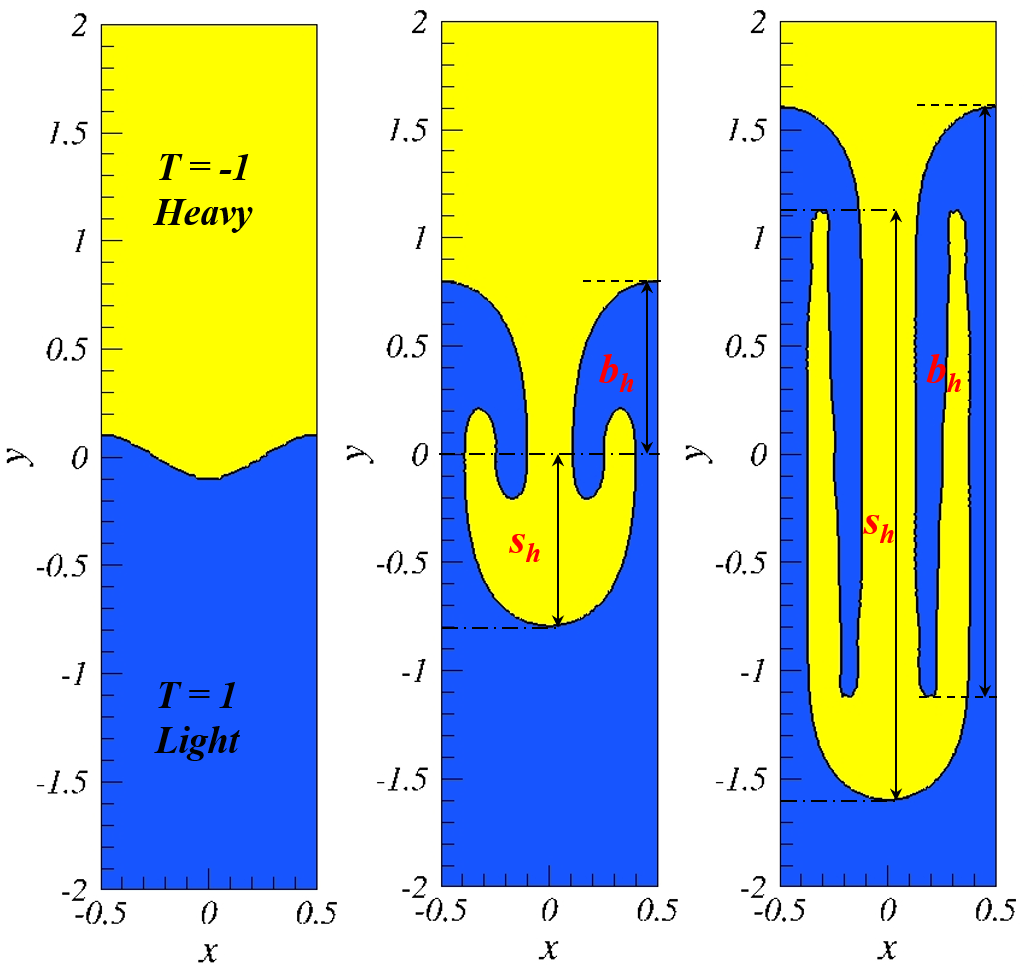
Figure 1: Three snapshots illustrating the progression of the instability. Note that under the Boussinesq’s approximation (low Atwood numbers or density ratios), the instability looks symmetric, for the bubble and the spike.
The Rayleigh-Taylor (RT) Instability is perhaps one of the most widely studied fluid instabilities and is commonly observed in nature as well as in commercial and engineering processes. For instance, think of the streaks of (usually cold) milk or creamer poured into a cup of coffee. These streaks or fingers form the Rayleigh-Taylor instability and it manifests when fluids of different densities are accelerated into one another. For a brief, yet interesting explanation of this instability, check out this YouTube video by FYFD!
For a term project for a Multiphase flows class, I wrote code to simulate two-dimensional RT instability for small density ratios.
The adjacent figure shows the progression of the RT instability for fluids whose densities differ by a very small amount. Density stratification is modeled as a consequence of temperature differential in two layers of the same fluid, using the Boussinesq’s approximation. The two-phases are colored by contours of the temperature field. The cool, denser fluid (yellow) initially starts above the warm, lighter fluid (blue). The interface between the two fluids is displaced using a cosine perturbation, which sets the instability in motion.
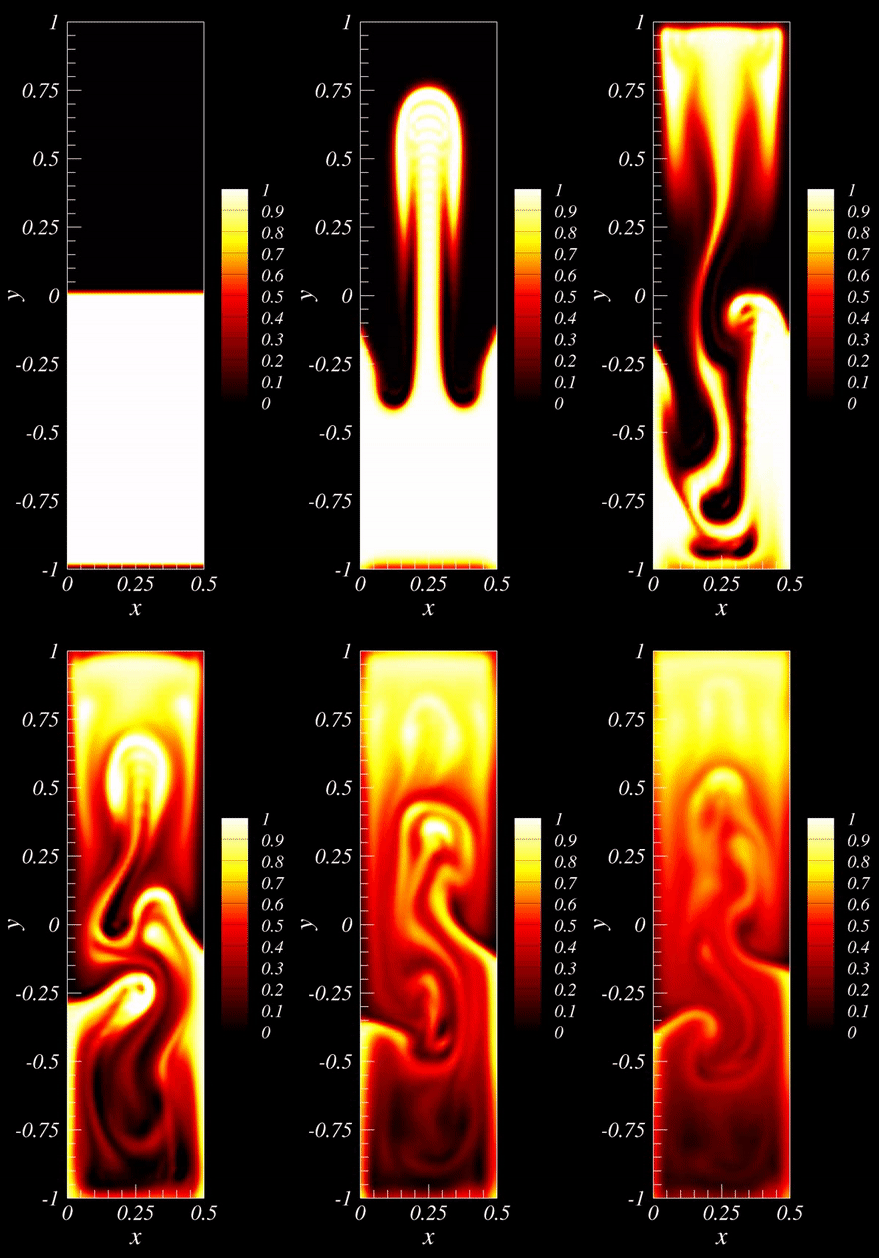
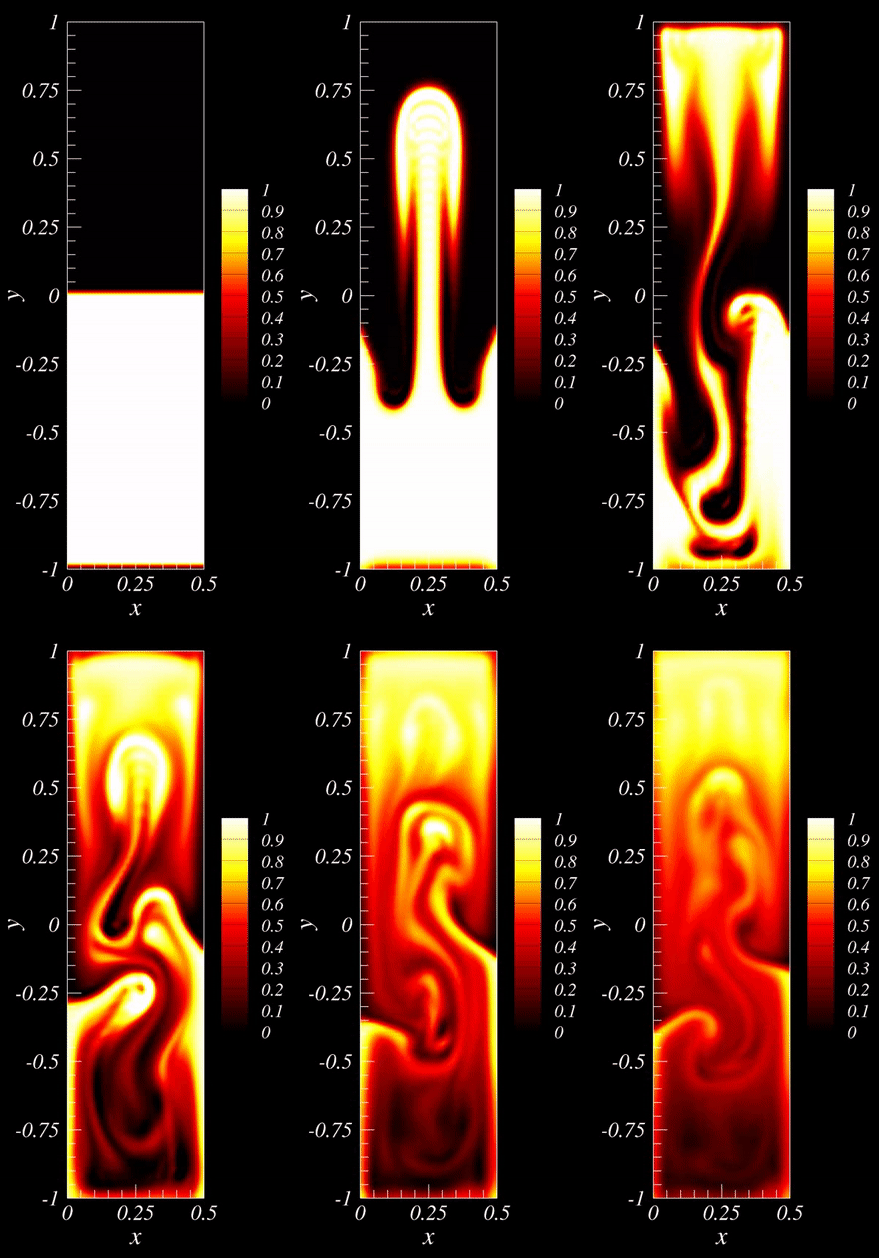
Figure 2: Rayleigh-Taylor Instability or Lava lamp? You decide!
For low density ratios (approaching unity), the instability permeates equally through the lighter and denser fluids, as seen in Figure 1. The lighter fluid penetrating the denser fluid is called “the bubble”, while the denser fluid penetrating the lighter fluid “the spike”. For Boussinesq fluids, the spike and bubble are typically of equal size. More details about the problem and simulations can be found in the complete project report PDF.
After completing the project I thought I’d have some fun with the recently written Boussinesq solver, and I created what looked like (to me) a lava lamp animation using a confined Rayleigh-Taylor instability (right).